

Cognitive Behavioral Therapy (CBT) in Plantation, Florida
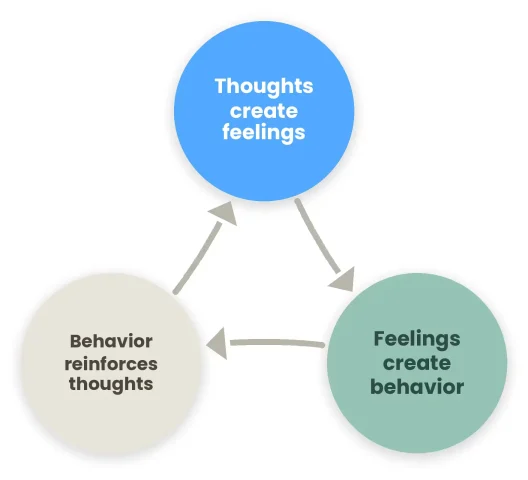
Cognitive Behavioral Therapy, commonly known as CBT, is one of the most well-researched and widely used forms of talk therapy. It’s built on a simple idea: the way you think directly shapes the way you feel and the way you behave.
When thought patterns become distorted or overly negative, they can drive anxiety, low mood, avoidance, and stress that feels difficult to shake. I use CBT to help you notice those patterns, and build more balanced and workable ways of thinking and responding.
I offer individualized, mental health counseling for adults in Plantation and Broward County in person, and throughout Florida by telehealth.
Why Choose Us
How I Use Cognitive Behavioral Therapy
I’m a Licensed Mental Health Counselor with 10 years of experience helping adults manage anxiety, chronic stress, overthinking, and the effects of trauma. CBT fits naturally into my work because it’s practical and structured, giving you concrete tools you can apply in everyday situations. My sessions are collaborative: instead of telling you what to think, I work directly with you to identify unhelpful patterns and test out new ones together. Read more about why clients choose to work with me.
My background in crisis response and high-pressure environments – including my time as a Marine Corps Officer and years spent training clinicians and corporate teams in crisis response – is part of why I gravitate toward structured approaches like CBT. Both are built around the same idea: give someone a clear, repeatable process – a set method you can use again and again in difficult situations.
What CBT Can Help With
- Generalized anxiety and chronic worry
- Panic attacks and physical symptoms of anxiety
- Depression and low motivation
- Obsessive-Compulsive Disorder (OCD), often combined with Exposure and Response Prevention (ERP)
- Chronic stress and burnout
- Overthinking, perfectionism, and difficulty tolerating uncertainty
- Irritability and difficulty managing anger
- Trauma-related thought patterns, such as hypervigilance or catastrophic thinking
What CBT Looks Like in Session
My CBT sessions are structured and goal-focused. Early sessions typically involve identifying the specific thoughts, feelings, and behaviors connected to what’s bringing you to counseling, and setting clear goals to work toward.
From there, we focus on recognizing automatic negative thoughts as they happen, examining the evidence for and against them, and practicing more balanced ways of responding.
Between sessions, I may ask you to try small, practical exercises, such as noticing thought patterns as they come up or gradually facing a situation you’ve been avoiding, so that progress carries over into everyday life rather than staying confined to the therapy room.
Benefits of CBT
Clients I work with often notice:
- A clearer understanding of the connection between their thoughts, feelings, and behaviors
- Practical tools for managing anxiety, stress, and low mood in the moment
- Reduced avoidance of people, places, or situations that trigger distress
- Skills that continue to be useful long after counseling ends
- A greater sense of control over reactions that once felt automatic
Common Conditions
- Anxiety & chronic stress
- Depression
- Career & workplace burnout
- Life transitions
- Grief & loss
- Relationship and communication issues
- ADHD
- Trauma & PTSD
- OCD
- Autism
Is Cognitive Behavioral Therapy Right for You?
CBT tends to be a good fit if you want a structured, goal-oriented approach and are willing to actively practice new skills between sessions. It’s not the only approach I use. Depending on your goals and history, I may combine CBT with mindfulness-based strategies, somatic and nervous-system-based techniques, Exposure and Response Prevention (ERP), or Solution-Focused Brief Therapy. A
free consultation is the best place to start if you’re not sure which approach makes the most sense for what you’re working through.
Frequently Asked Questions
What is the difference between CBT and regular talk therapy?
Traditional talk therapy can be more open-ended, while CBT is structured around specific goals, thought patterns, and practical exercises. Many clients find the structure of CBT helpful when they want tools they can apply right away.
How long does CBT take to work?
This varies by person and by what’s being addressed. CBT is generally considered a shorter-term approach compared to some other forms of therapy, though the exact timeline depends on your goals, history, and how consistently you practice the skills between sessions.
Do I need a specific diagnosis to use CBT?
No. I use CBT for a diagnosed condition, such as an anxiety disorder or depression, or for general stress, overthinking, or difficulty managing reactions, even without a formal diagnosis.
Is CBT available by telehealth?
Yes. Telehealth counseling is available throughout Florida, in addition to in-person sessions in Plantation and Broward County.
Book a Free Consultation
I provide in-person counseling in Plantation, Florida, and serve adults throughout Broward County, including Fort Lauderdale, Davie, Sunrise, Coral Springs, Tamarac, and nearby South Florida communities. Telehealth counseling is available throughout Florida.